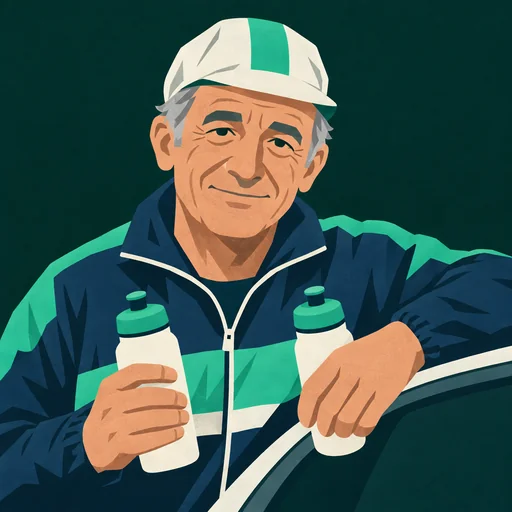

Dylan Teuns is stopping at thirty-four, after twelve seasons. On television they will show the Flèche Wallonne again, the Mur de Huy, Valverde behind him, and that is normal, it is his best win, he says so himself. They will show the Tour of Poland too, the two Tour de France stages. At the front, I couldn’t tell you. What I look at is the day after.
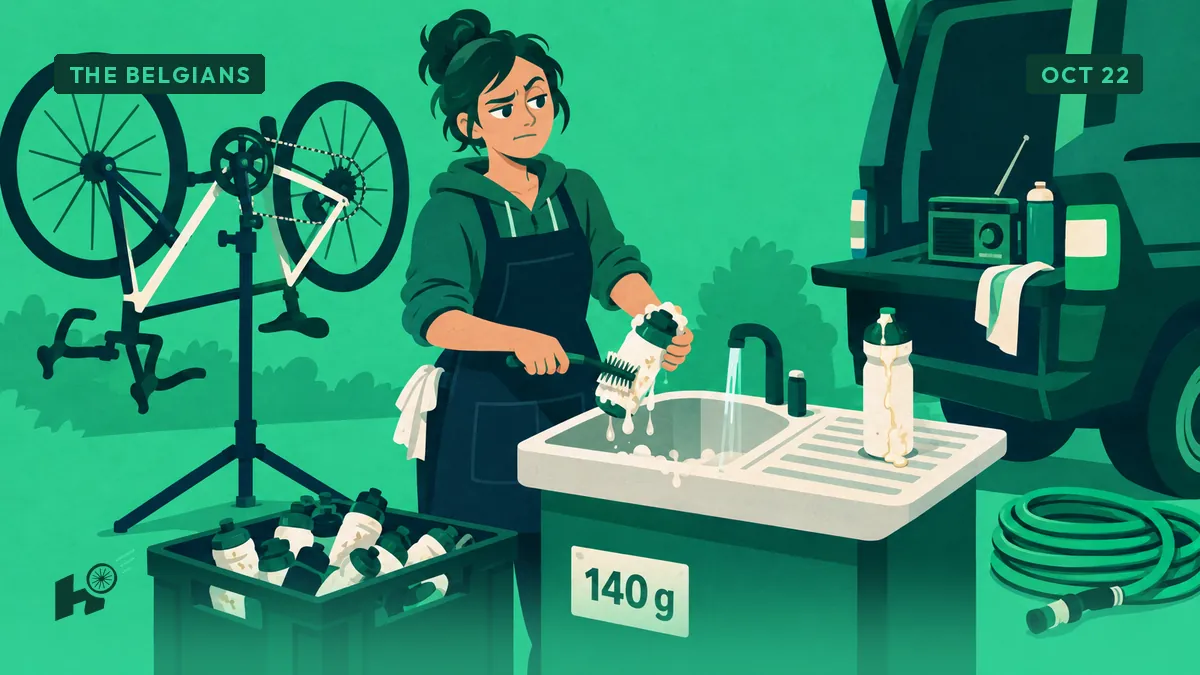
The day after, 30 October, he went out for a ride. The day before he stops; the day after he rides. How it went around him, I wasn’t there, I won’t tell you. With us, after the last season, that is mostly what I remember: you look for the team car in the mirror, and there is only the road. The first bidon I filled myself, at the kitchen tap, was a strange bidon. A bidon has to be earned, even that one.
He told Sporza he still had options, but not at the level he was aiming for, and that it was a shame. You say these things calmly. Then you move on: “We are busy sowing winter wheat right now.”
Winter wheat, I know a little, there is plenty of it around Ronse. You sow it when everyone is looking elsewhere, you leave it under the frost, and nobody films it until summer. Winter wheat is a domestique. It works once the camera has gone.
He added, laughing, that he did not plan to do much manual work and that he preferred to do as much as possible by machine. Well. De koers, the race, as they say in Flanders, you finish on the big ring too, when you can.
Machine, fine. But somebody oils the chain, mind you.
I read all this in the bar at a cyclocross, a coffee between my hands, the race already over and the barriers being taken down. A hundred and twelfth in the Ronde (the Tour of Flanders). Inside the time limit, and never a field of my own. He has one. I had another coffee.
It’s true, we checked: Sporza.