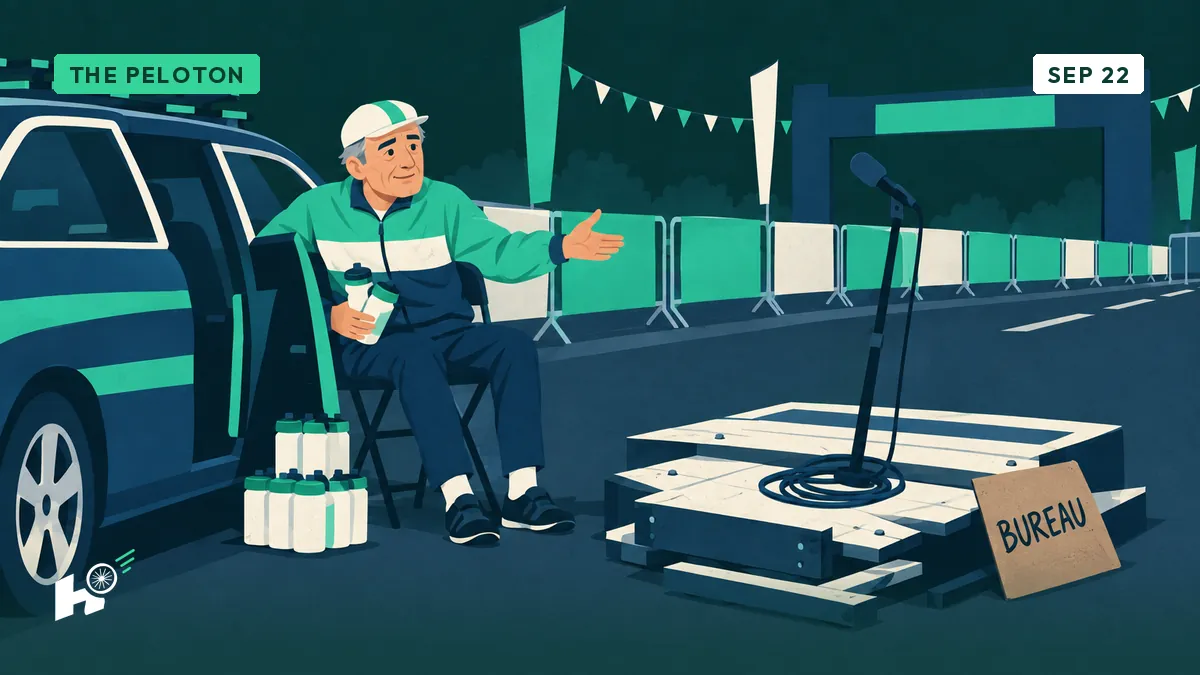
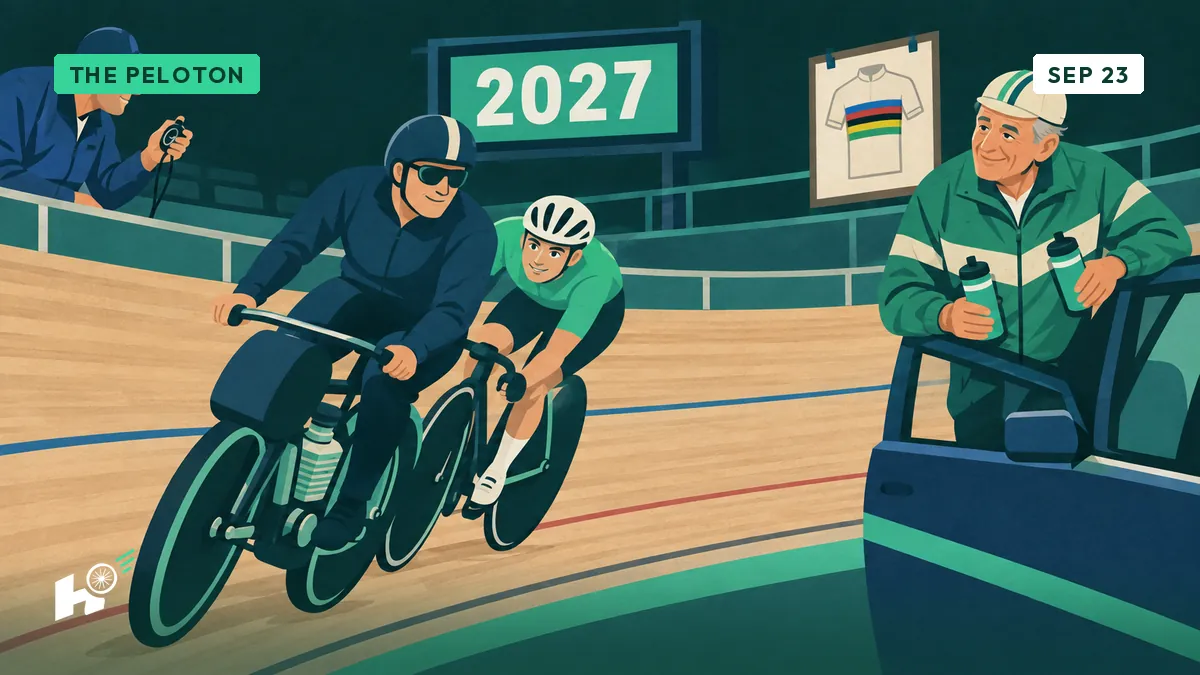
Motor-paced racing has a rider following a pacer, on a motorbike or a special bicycle, at a speed legs alone cannot sustain. The discipline left the Worlds after 1994, the year of Carsten Poldesch’s last title. The European Championship took over, scrapped in 2024, then brought back in 2025 with a women’s race won by Romy Kasper. In 2027, two rainbow jerseys will be up for grabs again, in Saint-Quentin-en-Yvelines: a men’s title and, for the first time, a women’s world title.
Sheltering behind someone, that was my whole career. Up front there was a leader or a motorbike, I couldn’t tell you, I never looked at the front. Motor-paced racing, at least, is honest: it tells you plainly who’s doing the pulling, and who’s sitting in the wheel.
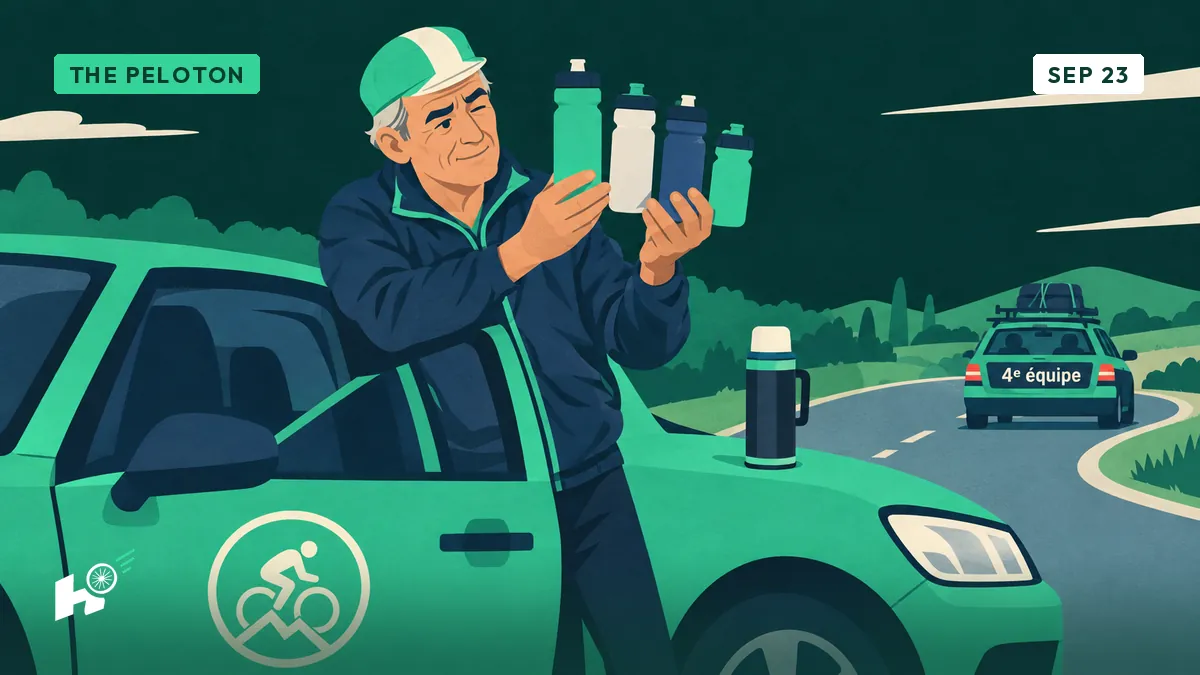
Rik reckons thirty-three years without that title is a long time, in a trade where everything is already counted in time cuts. He remembers stayers passing through, back in the day, at the kermesses (village circuit races) where they used to send him off for bidons; he never quite worked out the exact mechanics, only that one rider pulled and the other followed, and that spoke to him more than any bunch sprint ever did. He still slips into “de koers” (the race), the other half of his mother tongue, before catching himself and switching back. To him, motor-paced racing is the gruppetto turned inside out: instead of calculating a time cut, you calculate shelter.
He also notes the discipline had its own calendar, running quietly alongside, while the wider cycling world looked elsewhere. A European Championship that disappears one year and comes back the next, a women’s race finally arriving: Rik sees it as proof that even disciplines have their years inside the time cut, and their years of being let go at the foot of the climb.
We’ll finally know who’s at the front, in that discipline. Me, I’ll stay at the back, out of habit.
It’s true, we checked: DirectVelo.